
Loading...
Serving Topeka, KS and surrounding areas. (785) 588-1101
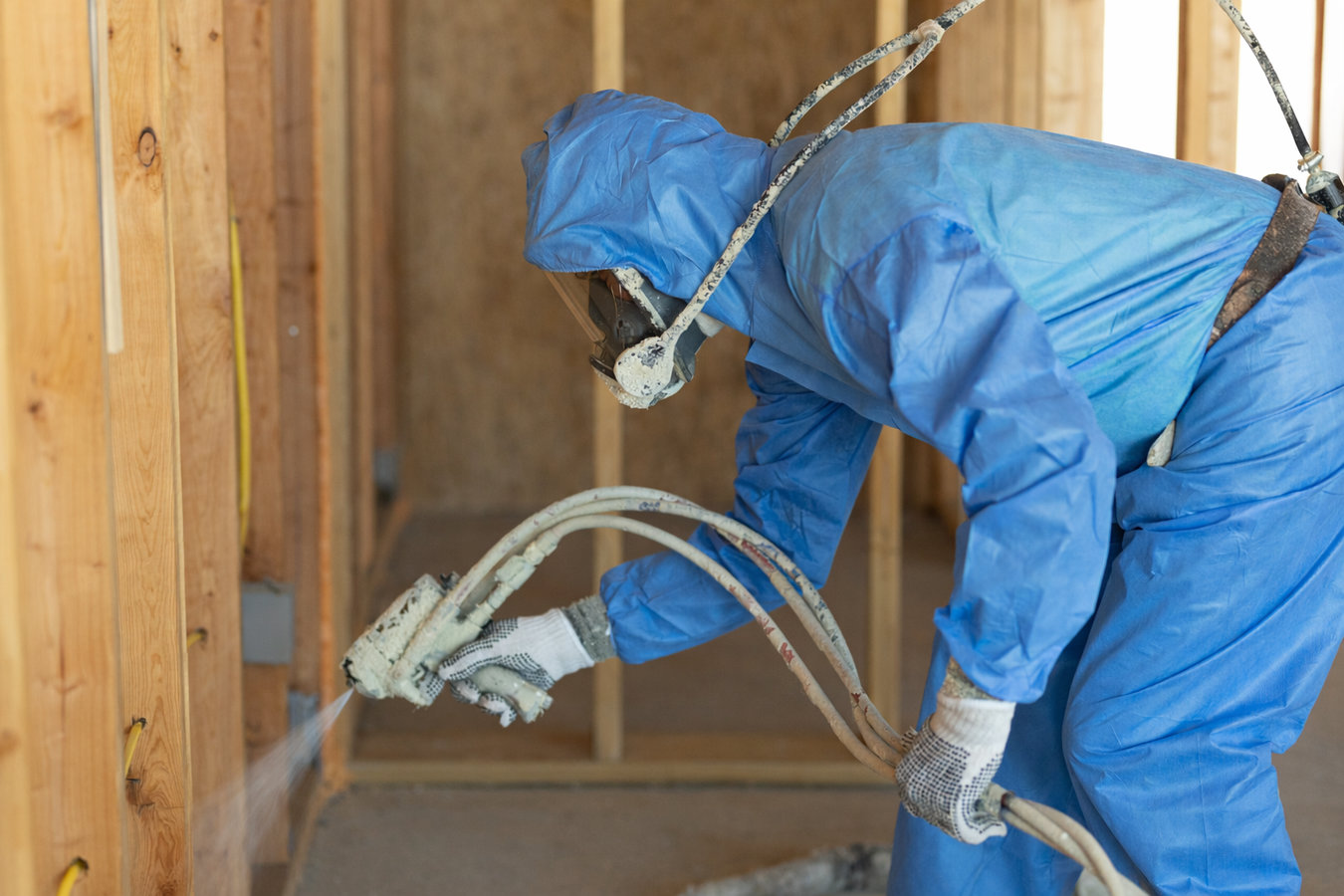
Your home should hold the air you pay to heat and cool. If it is not, spray foam seals every gap in a single installation, including the ones batts and blown-in insulation cannot reach.
Spray foam insulation in Topeka works by expanding on contact into a solid layer that insulates and air-seals at the same time, most residential jobs cover an attic, crawl space, or rim joists and are completed in one to two days. Unlike fiberglass batts that sit between framing but leave gaps around pipes and wires, spray foam fills every irregularity it touches. That dual action is what makes it effective in Kansas, where both summer heat gain and winter heat loss are serious problems.
Topeka homeowners in older neighborhoods like College Hill and Potwin often discover that decades of settling have created more air leakage than they realized. A drafty house is not just uncomfortable; it means your furnace and air conditioner are working harder than they should be, every single day. Spray foam addresses the root cause rather than just treating the symptom.
If your attic is part of the problem, our attic insulation service is often paired with spray foam to ensure complete coverage from the roof deck down through the floor system. The combination closes the thermal envelope from every direction.
If your gas or electric bills keep rising without any change in habits, your home may be losing conditioned air faster than your HVAC can replace it. In Topeka, where both summer cooling and winter heating demands are high, poor insulation forces your system to run harder and longer, and you see it in the bill every month.
Kansas wind is persistent, and if your home has gaps in the air barrier, you will feel it as a draft near exterior walls, electrical outlets, or along the floor on a cold, windy day. This is especially common in Topeka's older neighborhoods, where decades of settling have opened up small gaps that add up to real air leakage.
If you have looked into your attic and seen insulation that is compressed, discolored, or barely covering the floor joists, it is not doing its job. Many Topeka homes built before the 1980s have attic insulation that has settled to a fraction of its original thickness. Spray foam applied to the attic floor or roofline can dramatically improve performance in these spaces.
When one part of your home is noticeably harder to keep comfortable than the rest, it usually points to an insulation or air-sealing problem in that area. Rooms over garages, at the end of additions, or with exterior walls on multiple sides are common trouble spots in Topeka homes. Spray foam can target those specific areas without requiring a whole-house project.
The two main types of spray foam are open-cell and closed-cell, and the right choice depends on where in your home it is being applied and what the climate demands. For Topeka, closed-cell foam is usually the better fit for attics, exterior walls, and crawl spaces because it resists moisture movement and delivers a higher insulating value per inch. It is also what we recommend if you want your insulation to act as a vapor retarder, which matters given Kansas's humid summers. Our closed-cell foam insulation service covers that application in detail.
Open-cell foam is softer, less expensive, and works well for interior walls or areas where moisture is not a factor and you want good soundproofing alongside thermal performance. It is a reasonable choice in specific parts of a home but not the default for the applications where most Topeka homeowners see the biggest return.
We also apply spray foam in rim joists, band joists, basement walls, and tight framing cavities that are difficult or impossible to insulate with other materials. If you are not sure which areas of your home would benefit most, the free on-site assessment will answer that question before any commitment is made.
Best for attics, exterior walls, and crawl spaces where moisture resistance and maximum R-value per inch matter.
Suited for interior walls and spaces where budget and sound dampening are the primary considerations.
Seals one of the most common air leakage points in Topeka's older homes where the foundation meets the framing.
Provides full coverage in confined spaces that batts and blown-in insulation leave partially exposed.
Topeka sits in a climate where summer highs push into the mid-90s and winter lows can drop below zero, a seasonal swing of more than 100 degrees. That range puts real pressure on your home to hold conditioned air in and outside air out, and it puts real pressure on your HVAC system when the insulation is not up to the task. Spray foam's ability to seal and insulate at the same time makes it particularly well-suited to this climate.
Kansas is also one of the windiest states in the country, and wind-driven air infiltration is a major source of energy loss in Topeka homes. You can feel it as a draft near exterior walls on a blustery day, and you can see it as the furnace cycling on and off trying to keep up. A significant portion of Topeka's housing stock was built before the 1970s, when insulation standards were much lower than today, and homes in neighborhoods like Topeka and Lawrence often have more air leakage than their owners realize.
Topeka's humidity patterns also favor closed-cell foam over open-cell in most applications. Humid summers can drive moisture into wall assemblies, and closed-cell foam slows that movement in a way that open-cell foam does not. Homeowners in Kansas City and surrounding communities face the same conditions. According to the U.S. Department of Energy, air sealing and insulating together can cut heating and cooling costs by up to 15 percent in a typical home, and homes in climates with dramatic seasonal swings tend to see savings at the higher end of that range.
We respond within 1 business day. A few quick questions about your home help us know what to expect before we arrive. No commitment required to start the conversation.
We walk through the areas you want insulated, check for any moisture or access issues, measure the space, and explain which foam type fits your home. You get a written estimate before any work is scheduled.
The crew arrives with their equipment, masks off any surfaces that should not be sprayed, and applies foam in layers. Most residential jobs are done in one day. You and your pets will need to be out of the home for at least 24 hours while the foam cures.
We walk through the finished work with you, show you the coverage, and answer any questions. If anything looks uneven or incomplete, we address it before signing off. You leave the conversation knowing exactly what was done.
We respond within 1 business day. There is no obligation to the estimate, and no sales pressure at the assessment. After you submit, someone from our office will call to schedule a free on-site visit where we measure the area and explain exactly what we recommend.
(785) 588-1101Our crews have installed spray foam across Topeka and northeast Kansas for years and know how local homes are built. We document the work from the first visit to the final walkthrough, so you have a clear record of what was done on your property.
We work on homes across Topeka and 11 surrounding cities, from Lawrence to Manhattan. Knowing the housing stock in each area, including the pre-1970s homes in College Hill and Potwin, means we arrive prepared for what we will actually find.
Every estimate includes the foam type, application area, and expected performance level in plain language. No verbal agreements, no surprises when the invoice arrives. The quote you approve is the price you pay.
We respond to every inquiry within one business day and give you a specific re-entry time before the crew starts work, not after. You will know exactly when it is safe to return home, and we follow EPA guidance on re-entry for spray foam jobs.
Spray foam is not a small investment, and the quality of the installation matters as much as the material itself. Thin spots, missed areas, or foam applied over existing moisture problems can cost more to fix than they saved. We do the work right the first time, document it, and give you a completed job you can verify, not just trust.
The Spray Polyurethane Foam Alliance publishes homeowner resources on what quality installation looks like and what to ask a contractor before the job starts.
Pair spray foam with professional attic insulation to maximize your home's thermal envelope from top to bottom.
Learn moreLearn the specific advantages of closed-cell foam for moisture control and structural rigidity in Kansas homes.
Learn moreMost Topeka contractors book up fast once temperatures start dropping, so the best time to schedule is before the winter rush.