
Loading...
Serving Topeka, KS and surrounding areas. (785) 588-1101
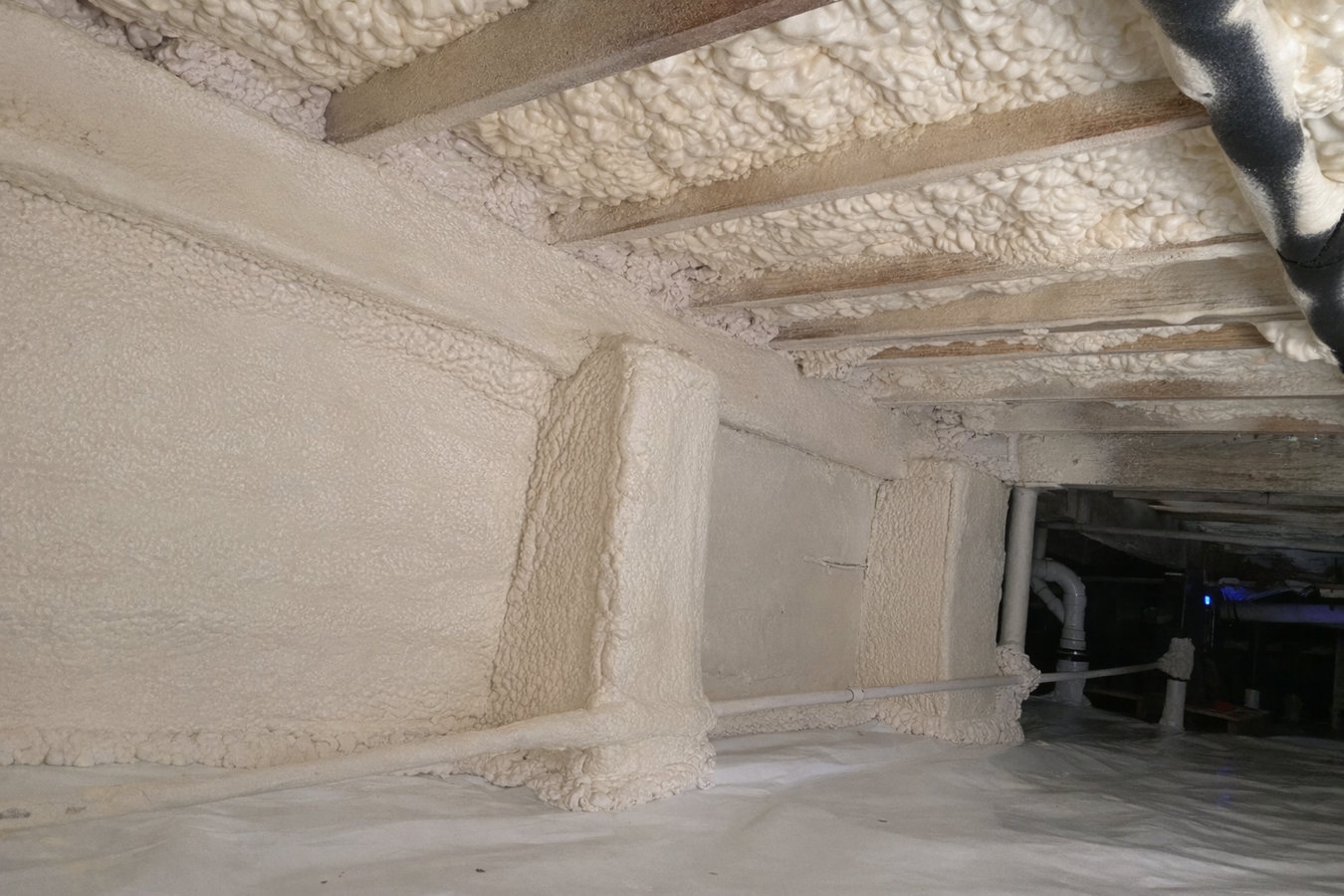
Cold floors, rising utility costs, and a musty smell every spring all trace back to the same place. We insulate and vapor-seal your crawl space so those problems stop coming back.
Crawl space insulation in Topeka creates a thermal barrier between the cold or damp ground beneath your home and the living spaces above it, most projects are completed in one day and include a vapor barrier to block ground moisture. Without it, temperature from the soil bleeds directly through your floors, your heating and cooling system compensates by running harder, and you pay for it every month on your utility bills.
Topeka homes built in the 1940s, 1950s, and 1960s, which make up a large share of the housing stock in neighborhoods like College Hill and Potwin, were often constructed with vented crawl spaces and little or no insulation below the floor joists. Decades of Kansas temperature extremes and the region's clay-heavy, moisture-retaining soil mean that whatever insulation was originally installed has likely settled, sagged, or absorbed enough moisture to be doing almost nothing at this point.
Crawl space insulation is frequently paired with a crawl space vapor barrier for complete moisture control, or with wall insulation when homeowners want to address the full thermal envelope of the house in one project.
If you walk across your kitchen or living room on a January morning and the floor feels noticeably cold through your socks, little or no insulation is separating your living space from the crawl space below. Topeka winters can drop well below 10 degrees, and an uninsulated crawl space makes your floors feel like a different season from the rest of the house.
After a wet Kansas spring, a crawl space with poor moisture control can develop mold or mildew that sends a musty odor upward into your living areas. If the smell gets stronger after rain events or on humid mornings, the source is usually the crawl space. This is not just an odor problem. It means moisture is actively working against your insulation and your home's framing.
If your utility bills have crept up over the past few winters or summers without any obvious change in your habits, a failing crawl space is one of the first places to investigate. Heat escapes through the floor in winter and seeps in during summer, and your system compensates by running longer cycles. Many Topeka homeowners find the crawl space is the biggest single energy leak in the house.
If you can safely look into your crawl space through the access hatch, check for insulation that is hanging down, visibly wet, or simply absent in sections. Fiberglass batts that have absorbed moisture lose most of their insulating value and eventually pull away from the framing entirely. This is a visual check any homeowner can do without special tools, and what you see will tell you a lot.
The two main approaches are floor joist insulation and full crawl space encapsulation. Floor joist insulation places batts or spray foam between the wooden beams running across the bottom of your house, keeping heat from escaping through the floor above. It is the right choice for vented crawl spaces where the goal is primarily thermal performance. We always include a vapor barrier as part of this installation because Topeka's soil moisture makes it a practical necessity, not a nice-to-have.
Full encapsulation seals and insulates the crawl space walls and floor, turning the space into a semi-conditioned area. This approach is well suited to homes where moisture has been a persistent problem, where pipes in the crawl space have come close to freezing, or where the homeowner wants the most complete solution. We use a dedicated crawl space vapor barrier system as part of every encapsulation project.
For homes where old insulation needs to come out before new material goes in, we handle the removal as part of the same job so the project is finished in a single visit. If you are also planning to address the rest of the home, our wall insulation service covers the above-grade part of your thermal envelope.
Best suited for vented crawl spaces in Topeka homes where thermal performance is the primary goal and moisture is under control.
For homes with persistent moisture, freeze risk to pipes, or where the homeowner wants the most comprehensive solution.
Included with every crawl space insulation project to block ground moisture from rising into the insulation and framing above.
Old insulation that is sagging, wet, or contaminated is pulled out first so new material performs as intended from day one.
Topeka sits in a climate zone with summer highs regularly above 95 degrees and winter lows that drop below 10 degrees. That range of more than 100 degrees means your crawl space is constantly being pushed between extremes, and any gap in coverage shows up fast as uncomfortable floors, frozen pipes, or energy bills that keep climbing. Homes here tend to see a faster return on insulation investments than those in milder climates precisely because the system is working hard in both directions.
The soil throughout Topeka and Shawnee County contains a high proportion of clay, which holds moisture and releases it slowly. During the wet springs that come with living in northeast Kansas, that moisture migrates upward into crawl spaces, saturating insulation and creating conditions where mold and wood rot can take hold. A vapor barrier is not optional in this region. It is what keeps an insulation installation from degrading in the first few years after it goes in.
We serve homeowners throughout the region, including Manhattan and Ottawa, where similar soil conditions and older housing stock create the same crawl space challenges. According to the U.S. Department of Energy, air sealing and insulating crawl spaces can reduce heating and cooling costs by 10 to 20 percent in many homes, with climates that have cold winters and hot summers tending toward the higher end of that range.
We respond within 1 business day. A few questions about your home's age and the problems you have noticed help us arrive prepared. No commitment required to schedule the estimate.
We inspect the crawl space directly, measure the area, check existing insulation and moisture levels, and explain our recommendation in plain terms. You receive a written estimate with a clear scope of work before anything is scheduled.
The crew clears any old insulation first if needed, then installs new insulation and the vapor barrier. Most standard Topeka homes are completed in one day. You do not need to leave your home, though keeping children and pets away from the access point is a good idea.
We walk you through what was done, where the vapor barrier is laid, and anything we noticed along the way worth monitoring. Your home is ready to use immediately. You should notice the difference in floor temperature within the first heating cycle.
We respond within 1 business day. Your estimate is written, includes all materials and labor, and comes with no obligation and no sales pressure. After you submit, someone from our office will call to schedule a free on-site inspection where we look at the crawl space directly and explain what we find.
(785) 588-1101Our crews know Topeka crawl spaces and how local homes are built. We document the condition before we start and show you the finished installation before we leave, so you know exactly what happened under your house.
We work throughout Topeka and neighboring cities. The older neighborhoods, including College Hill, Potwin, and Oakland, are among our most common service areas because the housing stock there drives consistent demand for crawl space repairs and upgrades.
Topeka's clay-heavy soil constantly releases moisture upward. A vapor barrier is not an optional add-on here. We include it in every crawl space insulation project because insulation installed over a bare soil floor will absorb that moisture and fail sooner than it should.
A standard Topeka crawl space insulation project is completed start to finish in a single visit. We give you a realistic timeline before work begins and hold to it. You should not have to rearrange multiple days of your schedule for a crawl space job.
Crawl space work is not visible once it is done, which is exactly why the walkthrough at the end of every job matters. We show you where the vapor barrier is laid, how the insulation is fitted, and anything we flagged during the work. You leave the conversation knowing what was done and why, not just trusting that it was.
The Insulation Contractors Association of America maintains standards for insulation installation quality and can help homeowners understand what professional work should look like before they hire anyone.
Close the loop on your home's thermal envelope by insulating exterior walls after the crawl space work is done.
Learn moreA dedicated vapor barrier installation addresses the moisture problem directly and extends the life of any insulation above it.
Learn moreLate winter and early spring are the best times to book before Kansas weather complicates the job. Most projects are finished in a single day, and you will feel the difference in your floors before the end of the week.