
Loading...
Serving Topeka, KS and surrounding areas. (785) 588-1101
Topeka Insulation serves Manhattan, KS homeowners with retrofit insulation, attic insulation, and spray foam. We have been working in the Manhattan area since 2022, serving homes from the older neighborhoods near K-State to the newer subdivisions off Kimball Avenue, and we respond within one business day.
Manhattan has a large stock of homes built in the 1940s through 1960s near the Kansas State University campus, and most of them were never insulated to today's standards. Our retrofit insulation service adds material to these existing homes without tearing out walls or disrupting the structure, improving comfort and reducing energy costs for homeowners who plan to stay put rather than move.
Manhattan's summers push into the low 90s and the heat index climbs even higher. In homes with thin or settled attic insulation, that heat pushes straight down into the living space and forces the air conditioner to run almost continuously. Upgrading attic insulation to the Department of Energy's recommended R-49 to R-60 level is the single highest-leverage step most Manhattan homeowners can take.
The older homes near Aggieville and downtown Manhattan have irregular framing and attic spaces that batts cannot fill completely. Blown-in cellulose or fiberglass is pumped in through a hose and settles into every corner and gap, providing coverage that rigid materials simply cannot match in these older floor plans.
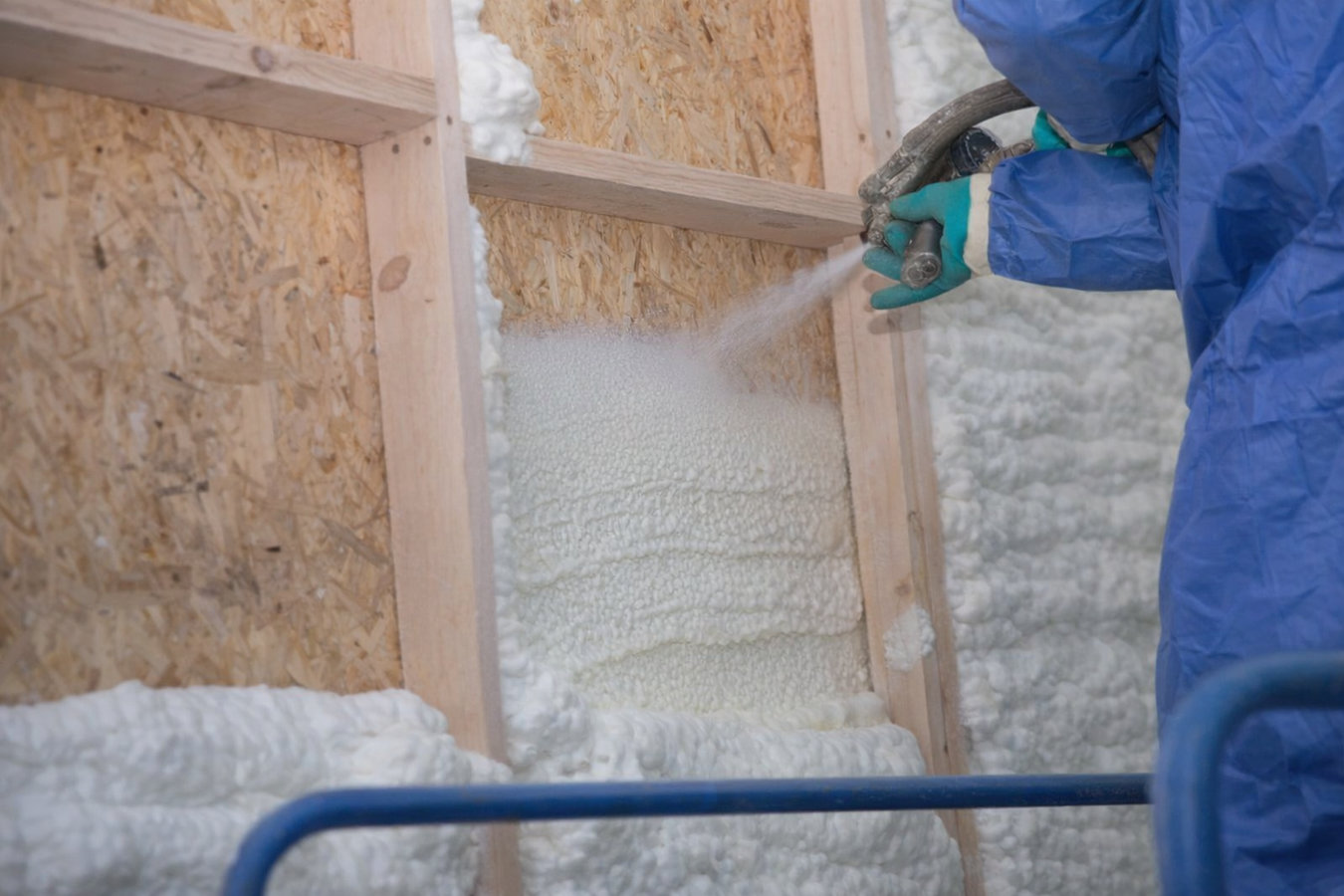
Manhattan's location at the edge of the Flint Hills means rocky, shallow soil and crawl spaces that can be difficult to seal with conventional materials. Spray foam expands into every void in rim joists and crawl space walls, insulating and sealing against air and moisture in one application, which is especially useful in homes near the Big Blue River where ground moisture is a recurring concern.
Kansas wind is persistent, and Manhattan sits in open terrain where it has nowhere to slow down before reaching your walls. Air sealing closes the gaps in your building envelope before insulation goes in, and it is the step that makes the difference between insulation that performs well and insulation that looks thick but leaves your home feeling drafty.
Older homes throughout Manhattan, particularly those with limestone foundations common to the Flint Hills region, often have uninsulated crawl spaces that allow cold air to enter from below. Crawl space insulation combined with a vapor barrier controls ground moisture and stops the cold floor problem that plagues many Manhattan homes every winter.
Manhattan's climate follows the full Kansas pattern: summer highs that regularly reach 90 degrees or above, winters where the ground freezes solid for weeks at a time, and freeze-thaw cycles from November through March that stress every building material in contact with the ground. The National Weather Service climate data for Manhattan shows average January lows that drop well below 20 degrees, with stretches well below that in a hard winter. Insulation that performs adequately in a milder Midwestern city is simply not sufficient here.
The housing stock near Kansas State University is heavily weighted toward homes built between the 1920s and 1960s. Many of these homes were originally insulated with materials that have settled to a fraction of their original thickness, and some of the older ones were never insulated in the walls at all. Brick and limestone construction, which is common in this part of the Flint Hills region, is durable but not inherently well-insulated. A contractor who only works on new vinyl-sided subdivisions will not know how to approach these materials.
Manhattan's location at the confluence of the Big Blue River and the Kansas River means that low-lying areas have real moisture exposure after spring rains. Even homes away from those corridors see crawl space moisture after heavy precipitation because the rocky, shallow Flint Hills soil drains poorly in some areas. Moisture problems and insulation problems compound each other, and solving one without addressing the other rarely lasts.
We have been serving Manhattan homeowners since 2022, regularly working with the City of Manhattan Community Development office when projects require permits. Our crew encounters the full range of Manhattan's building stock on a regular basis: the limestone-foundation houses near Aggieville, the brick bungalows just off Poyntz Avenue, and the vinyl-sided homes in newer subdivisions along Kimball Avenue and the northwest side of town. Each type presents different challenges, and we know what to look for in each one.
Getting around Manhattan is straightforward once you know the layout. Most of our jobs in the older parts of town are concentrated between Claflin Road to the north and Ft. Riley Boulevard to the south, with Aggieville and the K-State campus at the center. Newer work takes us out toward Tuttle Creek Boulevard and the subdivisions on the northwest side. Fort Riley military families who need a fast turnaround get the same service we provide any other customer, and we schedule within one business day.
We also serve homeowners in nearby Junction City, which sits just west of Fort Riley along I-70, and we travel to Topeka to the east. Both communities share the same Flint Hills-adjacent climate and similar housing challenges.
Reach us by phone or through the contact form and we will respond within one business day. You do not need to have a specific service in mind, just a description of the problem you are trying to solve.
We inspect the attic, crawl space, walls, or basement and explain what we find in plain terms. You will receive a written estimate before any work is agreed to, and we address any cost questions at that point, not after the job starts.
Most attic insulation jobs in Manhattan are completed in a single day. Retrofit wall or crawl space work may take two days. You do not need to be home during attic work, but we ask that someone be available for the walk-through at the start of each day.
Before we leave we walk you through the completed work and provide product documentation so you can claim the federal energy efficiency tax credit if your project qualifies. Questions after the job are answered promptly.
We serve homeowners throughout Manhattan, KS and respond within one business day. Free written estimates with no obligation.
(785) 588-1101Manhattan is a city of roughly 55,000 people in northeastern Kansas, best known as the home of Kansas State University. The university shapes the city's character and its housing market in equal measure: a large share of the homes closest to campus are renter-occupied, while the neighborhoods further out are more stable owner-occupied communities. About 47 percent of the city's housing units are renter-occupied, which is notably higher than most Kansas cities of similar size. Landlords managing older rental properties near K-State are among the homeowners we work with most often.
Manhattan sits at the eastern edge of the Flint Hills, a region of rocky, shallow soil and rolling tallgrass prairie. The terrain here is hilly by Kansas standards, with limestone close to the surface in many neighborhoods. The older parts of the city, especially around Aggieville and the streets north and south of Poyntz Avenue, feature a mix of homes built in the 1920s through 1960s. The newer subdivisions on the northwest and southwest sides, in areas like Wildcat Creek Estates, were built mainly from the 1990s onward and have a different set of insulation considerations. Fort Riley, one of the largest Army installations in the country, sits just west of the city and brings thousands of military families into the Manhattan housing market each year.
We serve the full Manhattan area, including neighborhoods near Tuttle Creek Lake to the north. We also cover nearby communities including Junction City to the west and Salina further west along I-70.
Spray foam creates an airtight seal that stops drafts, reduces moisture, and delivers high R-values in a single application.
Learn moreProperly insulated attics reduce heat gain in summer and heat loss in winter, lowering energy bills year-round.
Learn moreBlown-in insulation fills irregular spaces and hard-to-reach areas evenly for consistent thermal coverage.
Learn moreWhole-home insulation assessments and installations that address every area where conditioned air is escaping.
Learn moreSafe removal of old, damaged, or contaminated insulation to prepare your home for a fresh, effective upgrade.
Learn moreInsulating the crawl space prevents cold floors, moisture problems, and energy loss through the foundation.
Learn moreWall insulation reduces outside noise and improves thermal comfort in every room of your home.
Learn moreAir sealing closes gaps and cracks throughout the building envelope so your insulation performs at full efficiency.
Learn moreBasement insulation keeps the lowest level of your home comfortable and protects against moisture infiltration.
Learn moreClosed-cell foam offers the highest R-value per inch and also acts as a vapor barrier and structural reinforcement.
Learn moreOpen-cell foam expands to fill cavities completely, providing excellent sound dampening and thermal performance.
Learn moreSealing attic bypasses before adding insulation dramatically improves the effectiveness of any attic upgrade.
Learn moreA vapor barrier in the crawl space controls ground moisture that can lead to mold, rot, and poor air quality.
Learn moreProfessional vapor barrier installation protects your home from moisture damage in crawl spaces and basements.
Learn moreRetrofit insulation upgrades existing homes without major renovation, improving comfort and efficiency quickly.
Learn moreCommercial insulation solutions for offices, warehouses, and multi-unit buildings that meet code and cut operating costs.
Learn moreWe serve homeowners throughout Manhattan and the surrounding area. Call us or submit a request and we will get back to you within one business day.