
Loading...
Serving Topeka, KS and surrounding areas. (785) 588-1101
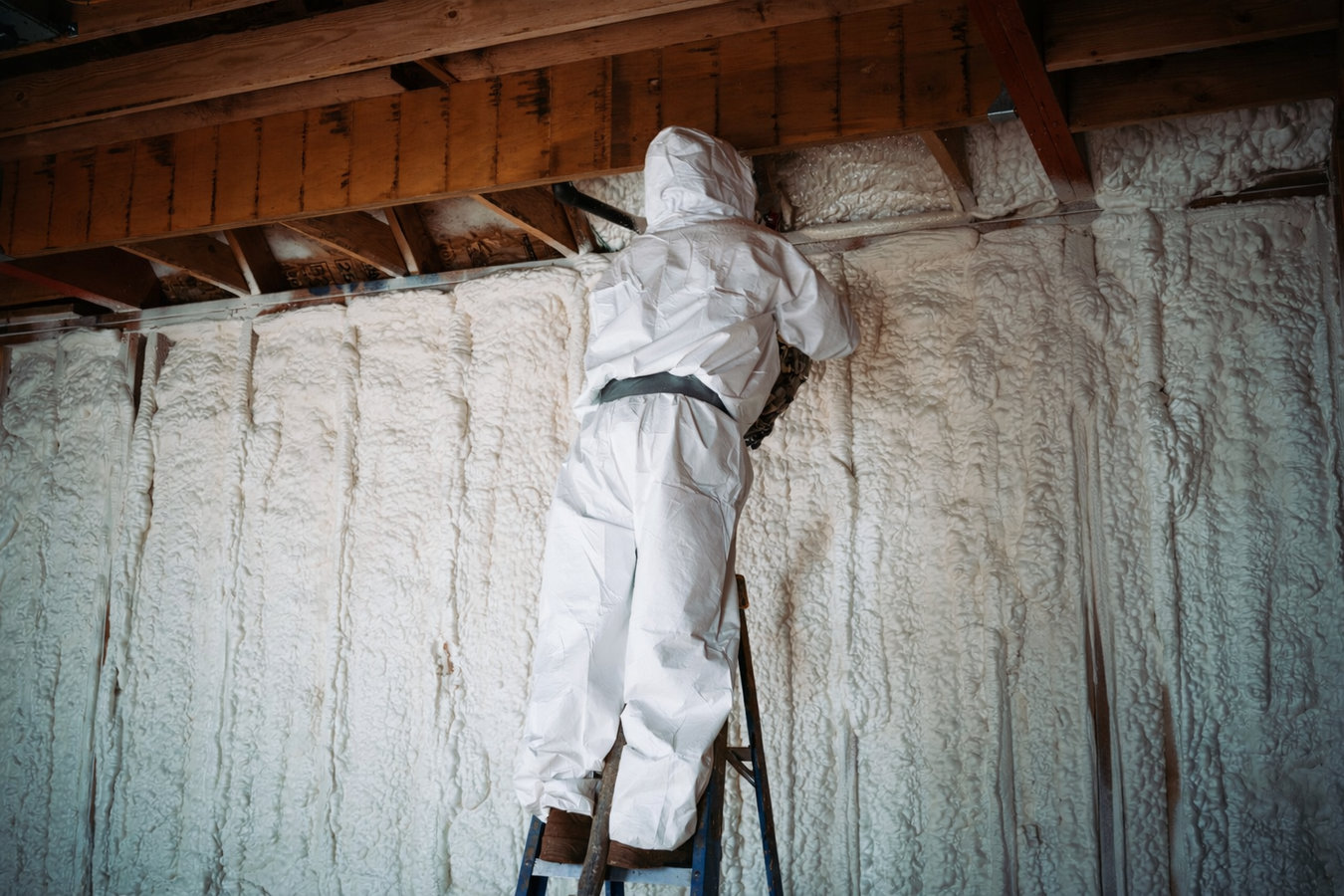
Topeka homes need insulation that holds up through 95-degree summers and below-zero winters. Closed-cell foam insulates and air-seals in one application, so your home stops losing conditioned air through every gap, crack, and rim joist.
Closed-cell foam insulation in Topeka is a two-part liquid sprayed onto surfaces inside your walls, attic, or crawl space, where it expands and hardens into a dense layer that slows heat transfer and seals air gaps at the same time. Most attic and crawl space jobs are completed in one to two days.
Most insulation only slows heat movement through a wall. Closed-cell foam also acts as an air barrier, stopping the conditioned air you pay to heat or cool from leaking out through cracks and gaps. That combination is why homes with closed cell spray foam often feel more consistent from room to room, not just warmer or cooler, but quieter and less drafty. If you are looking at the full-home picture, our spray foam insulation page covers how open- and closed-cell options compare for each part of the house.
For Topeka homes with older construction, closed-cell foam is particularly useful because it can be applied to existing wall cavities, attic decks, and crawl space floors without requiring a full renovation. Many homes in College Hill, Oakland, and the neighborhoods near downtown were never properly insulated to begin with, and spray foam is one of the few options that fills gaps comprehensively without tearing out walls.
If your heating bill climbs steeply every January and your cooling bill does the same in August, your home is losing conditioned air in both directions. In Topeka's climate, where both summer and winter are extreme, that means your furnace and air conditioner are working significantly harder than they need to. Insulation and air sealing address both seasons at once.
Hold your hand near an electrical outlet on an exterior wall on a cold Topeka day. If you feel a draft, outside air is entering through gaps in the wall cavity. This is common in homes built before modern air-sealing practices and is one of the clearest signs that the wall insulation, if any exists, is not doing its job.
If one bedroom is always too hot in summer or a corner of the house stays cold all winter, that points to uneven or absent insulation coverage. In older Topeka homes, it is common to find rooms where insulation was never installed properly or has settled and thinned over time. The thermostat cannot fix a room that is losing heat through the walls or ceiling.
Water stains, musty smells, or visible condensation in your attic or crawl space mean moisture is getting in and not getting out. In Topeka's humid spring and summer months, an under-insulated attic can become a source of mold and structural damage. Closed-cell foam applied to the attic deck or crawl space stops both the air movement and the moisture that cause this problem.
We apply closed-cell foam in the areas where it delivers the strongest return: attic decks and roof slopes, crawl space floors and walls, basement rim joists, and exterior wall cavities. The foam is sprayed in passes until the right thickness is reached, bonding directly to the surface and sealing gaps that other materials cannot fill. Because it hardens into a dense layer, it does not settle or shift over time the way loose-fill insulation can.
For homeowners comparing foam types, open-cell foam insulation is a lower-cost option that works well for interior walls and sound attenuation but does not resist moisture the way closed-cell does. In Topeka's climate, where humidity spikes are common and attic moisture is a real concern, closed-cell is the stronger choice for any area exposed to outdoor conditions. We explain the trade-off clearly during the estimate so you can make a confident decision for each part of your home.
If your project also involves air leaks at attic penetrations, plumbing chases, or ceiling fixtures, we address those at the same time. Sealing the air pathway first, then insulating, is the correct sequence, and it is the approach described in the U.S. Department of Energy's air sealing guidance.
Best for homeowners who want a conditioned attic, need moisture control, or have an older home with attic heat loss as the primary problem.
Best for homes where moisture from the ground is a concern and where a single material needs to handle both insulation and moisture management.
Best for any Topeka home where cold air is entering at the top of the foundation wall, regardless of whether a larger insulation project is planned.
Best for older homes during a renovation where wall cavities are accessible and original insulation is absent, thin, or damaged.
Topeka's temperature range is one of the most demanding in the Midwest. Summer highs regularly push past 95°F and winter lows can drop below 0°F, a swing of more than 90 degrees between seasons. That range means a poorly insulated home in Topeka is uncomfortable in both directions, and your heating and cooling system is working at near-maximum capacity for much of the year. Closed-cell foam handles that full range because it seals the air pathway that drives energy loss in both hot and cold weather.
Topeka's humid spring and summer seasons create a second layer of risk: moisture in attics and crawl spaces. Fiberglass batts can absorb and hold moisture when humidity is high, which reduces their insulating value and creates conditions for mold. Closed-cell foam does not hold water, which is why it is the right choice for any area in a Topeka home that is exposed to outdoor humidity. The U.S. Energy Information Administration notes that Kansas households spend more on energy per year than the national average, partly because of the climate and partly because of the older housing stock, which means improvements here tend to pay back faster than in milder regions. Homeowners in Topeka and surrounding communities like Shawnee deal with the same conditions.
Kansas has adopted a statewide energy code that sets minimum insulation requirements for homes, and the Kansas Corporation Commission oversees those standards. Contractors in Topeka are expected to meet or exceed those minimums on permitted work. Homeowners in Lawrence and across northeast Kansas who have had spray foam installed report that the comfort improvement is noticeable within the first heating or cooling season, not after years of waiting for the math to catch up.
You reach us by phone or online form and we respond within one business day. We will ask about the area you want insulated and schedule a walk-through before giving you any numbers. No cost, no commitment at this stage.
We look at your attic, crawl space, or walls, check what is already there, and note any problem areas such as moisture, gaps around pipes, or thin spots. This visit takes 30 to 60 minutes, and we explain what we find before leaving.
You receive a written estimate covering the scope of work, materials, total cost, and re-entry time after installation. This is when you ask about permits and timing. A trustworthy contractor expects questions and answers them clearly.
The crew arrives with their spray rig, masks off areas near the work zone, and applies the foam in passes until the right thickness is reached. After the curing period, we walk you through the finished work so you can see the coverage and confirm it matches what was quoted.
We assess your attic, crawl space, or walls, explain exactly what we find, and send you a written quote with no obligation. Most Topeka homeowners hear back within one business day.
(785) 588-1101We serve the greater Topeka region across 12 service areas, including Lawrence, Manhattan, Leavenworth, Shawnee, and Overland Park. That coverage means we understand how northeast Kansas housing stock, climate, and soil conditions affect insulation performance in ways a regional chain does not.
Spray foam is a specialized skill. The mix ratio, temperature at the gun, and application speed all affect how the foam performs. Our installers have hands-on spray foam training, not just general insulation experience. You can see the finished coverage before anything gets covered up, and we welcome your inspection.
We give you a specific re-entry time in writing before the job starts, not after the crew has already left. The Spray Polyurethane Foam Alliance recommends this as a standard practice, and we follow it on every residential project. If you have children or pets, we walk you through what to expect so there are no surprises on installation day.
A typical Topeka attic or crawl space spray foam project is finished in one to two days. We schedule promptly and show up on time. You will not be left waiting for a crew that keeps rescheduling or a job that drags on longer than quoted.
Topeka's older homes, wide temperature swings, and humid summers create a specific set of insulation challenges. We know those conditions, we use materials suited to them, and we stand behind the work we do. When you call us, you talk to someone who has worked on Topeka homes, not a scheduling center hundreds of miles away.
A softer, lower-density foam option that suits interior walls and budget-sensitive applications where moisture resistance is less critical.
Learn moreA full overview of spray foam options for Topeka homes, including how to choose between open- and closed-cell for each part of the house.
Learn moreBeat the next Kansas heat wave or cold snap. Get a free estimate today and we will walk you through exactly what your home needs.