
Loading...
Serving Topeka, KS and surrounding areas. (785) 588-1101
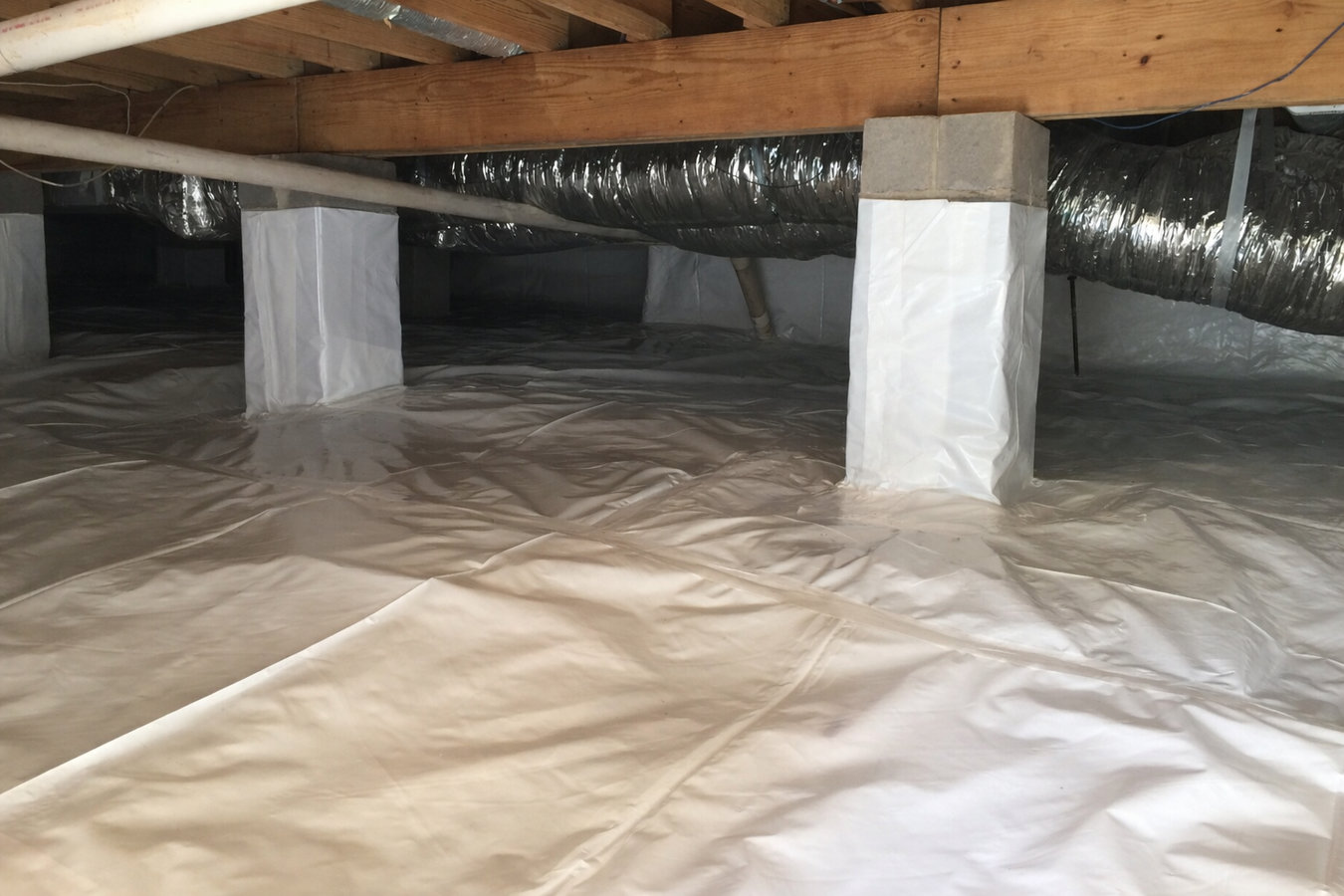
Topeka's clay soil pushes moisture upward into crawl spaces year-round. A properly installed vapor barrier stops that moisture before it reaches your floors, joists, and insulation.
Crawl space vapor barrier installation in Topeka means laying heavy-duty polyethylene sheeting across the bare dirt floor of your crawl space, sealing the seams, and anchoring the edges to the foundation walls. Most standard jobs are finished in a single day, with no curing time and no need to leave your home.
The plastic sheet does one critical thing: it blocks ground moisture from rising up into the wood, insulation, and living spaces above it. Without a barrier, that moisture works silently for years, softening floors, growing mold, and driving up heating and cooling costs. Many Topeka homeowners notice cold floors and musty smells long before they realize the crawl space is the source. Pairing a vapor barrier with crawl space insulation delivers both moisture control and thermal performance at the same time, which is how we typically approach older Topeka homes that need both.
The U.S. Department of Energy provides guidance on crawl space moisture control and insulation best practices. Read their crawl space insulation guidance at energy.gov.
If your hardwood or laminate floors feel noticeably cold underfoot during Topeka winters, or if there are spots that feel slightly spongy when you walk on them, moisture from below is likely the cause. Ground moisture weakens floor joists and subfloor material over time. This is especially common in Topeka homes built before 1980 that have never had moisture protection installed.
A persistent musty or earthy smell in your home, especially in ground-floor rooms or near floor vents, is one of the clearest signs of crawl space moisture. In Topeka, this smell tends to peak in late summer when outdoor humidity is highest and the crawl space has absorbed moisture all season. If the smell is strongest near floor registers, that is where to start.
If you have looked into your crawl space and seen water droplets on pipes, wet or dark-stained soil, or standing water after rain, the crawl space has a moisture problem. Topeka's clay soil holds water near the surface after storms, and that water pushes upward with nowhere else to go. Even occasional standing water is enough to cause serious structural damage over time.
When a crawl space is damp, the insulation above it loses its ability to hold heat. Wet insulation simply does not perform the way it was designed to. If your heating and cooling costs have risen gradually and you cannot point to a clear cause, a moisture-compromised crawl space could be pulling heat out of your home all winter and letting humidity in all summer.
Not every crawl space needs the same solution. For most Topeka homes, a heavy-duty floor liner with properly sealed seams and anchored edges is the right call. The plastic does not need to be fancy to work, but it does need to be installed correctly. Thinner materials and loose seams fail within a few years, especially in crawl spaces where a plumber or pest inspector might walk through. We use material rated for long-term durability and size every installation to the actual crawl space dimensions.
For homes with persistent moisture, wall-to-floor encapsulation makes sense. The barrier extends up the foundation walls and is sealed at the top so outside air cannot bypass the floor liner entirely. Some encapsulation projects also include closing off the foundation vents to create a more controlled environment. When standing water has been a recurring problem, we discuss adding a full vapor barrier installation with a dehumidifier, which actively pulls moisture from the air in the crawl space year-round. The dehumidifier makes the most difference in homes with vented crawl spaces in older Topeka neighborhoods, where outdoor humidity can enter during summer months.
Older homes where thin plastic has been in place for decades often need a complete replacement before any new work can be done well. Deteriorated plastic traps moisture underneath it rather than blocking it. Removing the old material is the first step in those cases, and we include that in the project scope when it applies.
Best for most Topeka homes: heavy-duty polyethylene sheeting covers the entire crawl space floor with overlapping, taped seams and anchored edges.
Suits homes with persistent moisture problems: the barrier extends up the foundation walls and is sealed at the top, creating a more complete moisture envelope.
Designed for crawl spaces with high humidity or a history of standing water, where a barrier alone cannot maintain healthy moisture levels.
Right for older Topeka homes where thin or deteriorated plastic has been in place for years and is trapping moisture rather than blocking it.
Most of Topeka sits on heavy clay soil that absorbs water slowly and holds it near the surface for days or weeks after rain. Unlike sandy soil that drains away quickly, clay keeps moisture pressing upward against crawl space floors season after season. This is why vapor barriers are not optional for homes with crawl spaces in this area. They are a practical necessity. Topeka's humid summers, which regularly see relative humidity above 70 percent from May through September, add outdoor moisture to the ground moisture already present.
Topeka also has a significant share of older housing stock. Homes built in the 1920s through the 1960s in neighborhoods like College Hill, Potwin, and North Topeka were constructed with bare dirt crawl space floors and no moisture protection. That was simply standard practice at the time. Many of those homes have never had a barrier installed, which means the crawl space has been absorbing ground moisture for decades. Freeze-thaw cycles in winter, when the clay soil expands and contracts repeatedly, accelerate the upward push of moisture and stress older foundation walls.
We serve homeowners across the region, including Topeka, Leavenworth, and Lawrence. The moisture conditions driven by clay soil and older construction are common throughout this corridor, and we approach every crawl space based on what we actually find rather than a one-size-fits-all solution.
When you reach out, we ask a few basic questions about your home's age and whether you have noticed any signs of moisture. We typically schedule an in-home assessment within a few days and reply to all messages within one business day.
We access the crawl space ourselves to assess the soil condition, any existing plastic, signs of water intrusion, and the overall size and layout. Be cautious of any contractor who quotes without looking first. We provide a written estimate covering all materials, labor, and any permit fees.
The crew removes old plastic, debris, or damaged insulation from the space. They roll out the new barrier, overlap the seams, tape them securely, and anchor the edges to the foundation walls. Most standard crawl spaces are completed in a single day.
When finished, we walk you through the installed barrier in person or with photos before we leave. All debris is removed from your property. We tell you how to check the crawl space yourself in the future and follow up after the first season to confirm everything is holding.
We inspect your crawl space, explain what we find in plain terms, and give you a written estimate before any work begins. No pressure, no surprises.
(785) 588-1101We have installed vapor barriers in homes throughout Topeka's older neighborhoods, including pre-war bungalows in College Hill and Potwin and postwar ranch homes built through the 1960s. That hands-on experience with Topeka's clay soil and housing stock means we know what conditions to expect before we open the access hatch.
A vapor barrier is only as good as its weakest seam. We overlap every joint, tape every seam, and anchor the edges to the foundation walls on every installation. When we are done, there is no bare dirt showing and no loose edges for moisture to sneak past.
You will always know exactly what is under your house. We document the crawl space condition before work starts and show you the finished installation before we leave. That record protects you if questions ever come up during a home sale or insurance claim.
Every quote we provide is written, itemized, and covers all materials and labor before work begins. Topeka homeowners on modest budgets deserve to know exactly what they are committing to. We do not add charges after the fact, and we do not start work until the estimate is agreed upon.
We combine direct experience with Topeka's clay soil and older housing stock with a straightforward process: inspect first, explain what we find, provide a written estimate, and show you the finished work before we leave. The EPA's moisture control guidance makes clear that crawl space moisture problems rarely stay contained to the crawl space. Addressing them promptly is the most cost-effective approach.
Full-scope vapor barrier installation for crawl spaces and basements, including debris removal, wall coverage, and dehumidifier options for homes with persistent moisture.
Learn moreInsulation for the walls and ceiling of your crawl space that works alongside a vapor barrier to control both moisture and heat loss from below.
Learn moreTopeka's wet spring season fills our schedule quickly. Call today or request a free estimate online to lock in your installation date.