
Loading...
Serving Topeka, KS and surrounding areas. (785) 588-1101
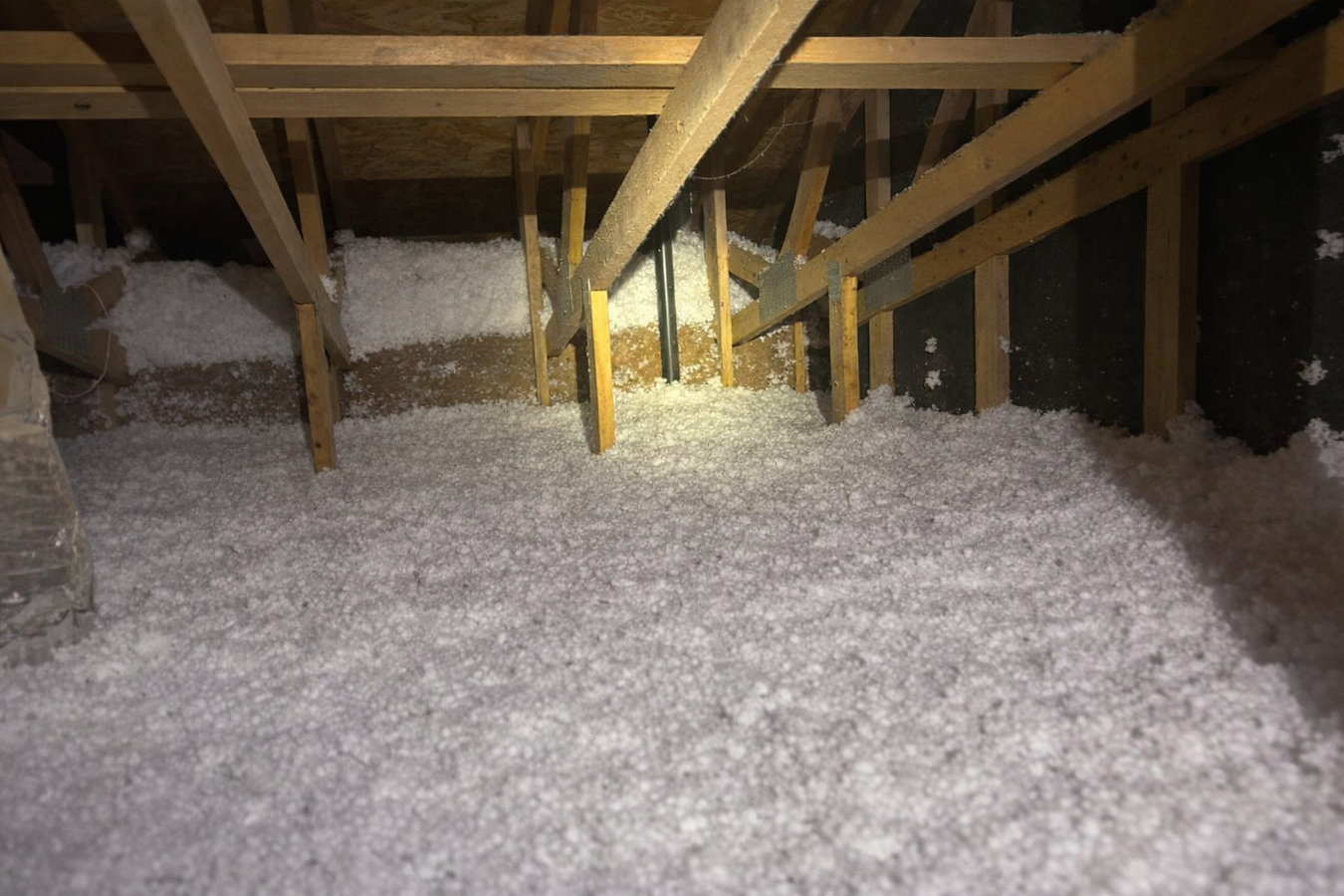
Topeka Insulation provides blown-in insulation, attic upgrades, and spray foam to homeowners throughout Ottawa, KS. From early-1900s brick homes near Old Depot Plaza to ranch-style houses on the south side of town, we have served Franklin County residents with free written estimates and replies within one business day.
Ottawa has a large share of homes built before 1950, many of which were insulated to standards that fall well short of what the Department of Energy recommends for northeast Kansas winters. Our blown-in insulation service adds loose-fill cellulose or fiberglass to attic floors and wall cavities, filling gaps and corners that batts cannot reach and bringing older homes up to current R-value recommendations without tearing out finished surfaces.
Ottawa summers bring attic temperatures well above 120 degrees Fahrenheit, and the humidity that comes with northeast Kansas summers can cause moisture to accumulate in a poorly ventilated attic. The Department of Energy recommends R-49 to R-60 for attics in this climate zone. Many Ottawa homes built before 1970 are well below that, and the shortfall shows up directly in summer cooling costs and winter heating bills.
Ottawa's clay-heavy soil drives moisture into crawl spaces and basements, especially in older homes on stone or brick foundations near the Marais des Cygnes River. Closed-cell spray foam applied to rim joists and crawl space walls creates a moisture barrier and insulating layer in one application, addressing the two most common lower-envelope problems in Franklin County homes at the same time.
Many older Ottawa homes were built with vented crawl spaces that made sense under old building science but create ongoing moisture and cold-floor problems under today's understanding. Encapsulating and insulating the crawl space reduces humidity in the living space above, protects floor joists from long-term decay, and makes a noticeable difference in floor comfort during the months Ottawa winters are at their coldest.
Ottawa homes built in the early and mid-1900s frequently have brick exteriors or wood-frame construction with plaster interiors, and many have hollow or minimally filled wall cavities. Blown-in dense-pack insulation can be installed through small holes drilled into exterior siding or interior plaster, with patches applied that are nearly invisible once painted. This upgrade makes a significant difference in homes that have always had one room that stays cold no matter what the thermostat says.
Ottawa was founded in 1864, and a significant portion of its housing stock reflects that age. Homes built before World War II were constructed without modern energy codes and with insulation materials that have been settling and degrading for decades. Many have plaster walls, stone or brick foundations, and attic assemblies that were never upgraded since the home was built. These are not cosmetic issues; they are structural ones that drive up heating and cooling costs every month they go unaddressed.
The clay-heavy soil throughout Franklin County expands when wet and contracts when dry, which creates seasonal movement that works against foundations, crawl space walls, and concrete slabs. Properties near the Marais des Cygnes River face the additional risk of high groundwater during wet springs, which can push moisture into crawl spaces and basements from below. Homes on older stone or brick foundations are especially vulnerable to this pattern, and the damage it causes often starts silently.
Ottawa summers are hot and humid, with temperatures frequently reaching the 90s from June through August. That humidity accelerates wear on attic structures that are not properly insulated or ventilated, and it creates the conditions for moisture damage in spaces that never fully dry out. Ottawa winters bring repeated freeze-thaw cycles that stress the entire building envelope. Homes that are not properly insulated are fighting both extremes with a system that was never designed to keep up.
Our crews regularly work on the pre-WWII brick and wood-frame homes that make up Ottawa's historic residential neighborhoods, and we know what to expect inside these older structures: plaster walls, original balloon framing, and attic configurations that predate modern access standards. Insulation work in homes this age requires more care and adaptability than newer construction, and we factor that into every estimate we write.
Ottawa sits at the intersection of US-59 and US-169 in Franklin County, roughly equidistant between Kansas City and Emporia. The city's historic downtown area, anchored by Old Depot Plaza and Ottawa University, has a concentration of older residential properties within a short walk of commercial blocks. The south and west sides of town have more mid-century ranch-style homes and some newer subdivisions. We have worked on homes across all these neighborhoods and understand the different construction periods they represent.
Homeowners in Ottawa who are evaluating insulation contractors often also look at contractors serving Olathe and Lawrence. We serve all three areas and can typically schedule Ottawa jobs within the same week as your initial inquiry.
You reach us by phone or through our contact form and we respond within one business day. We ask a few basic questions about your home's age and what you have noticed so we arrive prepared for the assessment.
We visit your Ottawa home and assess the attic, walls, crawl space, and any areas of concern. You receive a written estimate with every line item listed before we recommend any work. There is no cost for this visit and no obligation to proceed.
Most Ottawa attic insulation jobs are completed in a single day. Wall insulation in older homes may take two days depending on the number of exterior walls and the construction type. You can stay home during the work; the process is noisy but contained.
Before leaving, we walk you through the completed work and provide written documentation of what was installed. You will need this to claim the federal tax credit for insulation improvements and to support any Evergy rebate application for qualifying energy efficiency upgrades.
We serve Ottawa and all of Franklin County with free written estimates and replies within one business day. No pressure and no upsells on work you do not need.
(785) 588-1101Ottawa is a city of roughly 12,000 people and serves as the county seat of Franklin County, located in northeast Kansas about 60 miles southwest of Kansas City. The city was founded in 1864 and has grown steadily around a stable, largely owner-occupied population that invests in maintaining homes for the long term. The character of Ottawa is shaped by its role as a regional hub for surrounding rural counties and by the presence of Ottawa University, which has anchored the community since 1865 and brings a steady population of students and faculty to the area year-round.
The residential landscape is dominated by single-family homes on individual lots. Near the historic downtown and around Old Depot Plaza, many homes date to the early 1900s and feature brick exteriors or wood-frame construction with plaster interiors. The south side of the city has a higher concentration of mid-century ranch-style homes and more recent construction. Rental properties are more common in the blocks near Ottawa University, where older homes have sometimes been converted to multi-unit use and may carry years of deferred maintenance.
Ottawa sits near the Marais des Cygnes River, which runs through Franklin County and gives the surrounding landscape its character. Spring flooding along the river corridor is a real and recurring concern for low-lying properties. Homeowners throughout the area, including those in nearby Lawrence and Topeka, deal with similar clay soil, freeze-thaw conditions, and older housing stock that rewards proactive maintenance.
Spray foam creates an airtight seal that stops drafts, reduces moisture, and delivers high R-values in a single application.
Learn moreProperly insulated attics reduce heat gain in summer and heat loss in winter, lowering energy bills year-round.
Learn moreBlown-in insulation fills irregular spaces and hard-to-reach areas evenly for consistent thermal coverage.
Learn moreWhole-home insulation assessments and installations that address every area where conditioned air is escaping.
Learn moreSafe removal of old, damaged, or contaminated insulation to prepare your home for a fresh, effective upgrade.
Learn moreInsulating the crawl space prevents cold floors, moisture problems, and energy loss through the foundation.
Learn moreWall insulation reduces outside noise and improves thermal comfort in every room of your home.
Learn moreAir sealing closes gaps and cracks throughout the building envelope so your insulation performs at full efficiency.
Learn moreBasement insulation keeps the lowest level of your home comfortable and protects against moisture infiltration.
Learn moreClosed-cell foam offers the highest R-value per inch and also acts as a vapor barrier and structural reinforcement.
Learn moreOpen-cell foam expands to fill cavities completely, providing excellent sound dampening and thermal performance.
Learn moreSealing attic bypasses before adding insulation dramatically improves the effectiveness of any attic upgrade.
Learn moreA vapor barrier in the crawl space controls ground moisture that can lead to mold, rot, and poor air quality.
Learn moreProfessional vapor barrier installation protects your home from moisture damage in crawl spaces and basements.
Learn moreRetrofit insulation upgrades existing homes without major renovation, improving comfort and efficiency quickly.
Learn moreCommercial insulation solutions for offices, warehouses, and multi-unit buildings that meet code and cut operating costs.
Learn moreWhether your home is near Old Depot Plaza, Ottawa University, or out on the south side of town, we serve all of Ottawa and Franklin County. Call now or submit online for a response within one business day.